Saturday, May 8, 2010

Effetto Castiglioni

DZINE founders Eve and Cardenio Petrucci recently returned from a trip to Milan for the Salone del Mobile. Having a few extra days to kill while the smoke from Iceland’s volcano cleared, they were able to make a long-awaited visit to the Effetto Castiglioni exhibit. See their experience below.


Cardenio Petrucci with Monica Castiglioni.

While in Italy we had the good fortune of making some new friends. At dinner one night we were introduced to Monica Castiglioni, the daughter of the late design genius Achille Castiglioni. After having a great conversation with her about her father, we discovered that she is a designer herself - a jewelry designer (she’s also a great photographer!). Later that week we visited her small shop and studio in the Isola neighborhood of Milan. She has a beautiful, unique collection of rings, bracelets, and necklaces that she has designed, as well as various other interesting accessories, each with a story. See for yourself by visiting her site http://www.monicacastiglioni.com./ . The next day we visited her father’s studio, which is now is a museum. When we arrived we met MOnnica’s sister, Giovanna Castiglioni. Giovanna runs the museum www.achillecastiglioni.it/en/studio.html and give a fantastic tour of her father’s studio, providing loads of entertainment and inspiration for any lover of design. If ever in Milan, visiting the Castiglioni museum should be a top priority.


Eve and Cardenio Petrucci with Giovanna Castiglioni (middle) with the dog Linea (line) in the Castiglioni studio.


Those few extra days in Milan also allowed us the time to see the exhibition “Effetto Castiglioni” at the DePadova showroom. Some of the models on display had been stored away in his studio for years and had not seen since his death in 2002. Both Castiglioni daughters, Monica and Giovanna, said that their father would have definitely approved of the exhibit, so congratulations to Didi Gnocchi, the exhibition’s curator.


"A tribute to an unfamiliar side of Achille Castiglioni. Effetto Castiglioni, the exhibition in Milan from 12 to 24 April 2010 at the De Padova showroom, presents for the first time the models of exhibit designs and architectural projects by this great master. Twenty-three models stored until today at the Studio Museo Achille Castiglioni of the Triennale Design Museum will leave their cardboard boxes to narrate the expertise of Castiglioni, in a path that extends from the 1950s to 2000.


Not just an internationally acclaimed master of design, but also a creator of works of architecture, including temporary structures like stands and installations for fairs and exhibitions. Projects documented precisely at the crucial moment of the creative idea: the model.
Achille Castiglioni, in the early years with his brother Pier Giacomo and then with his staff, patiently shaped and brought to life every creative intuition through the use of plaster casts, cardboard and materials of all kinds, to test the functional efficacy of his ideas. To experience their “effect”.

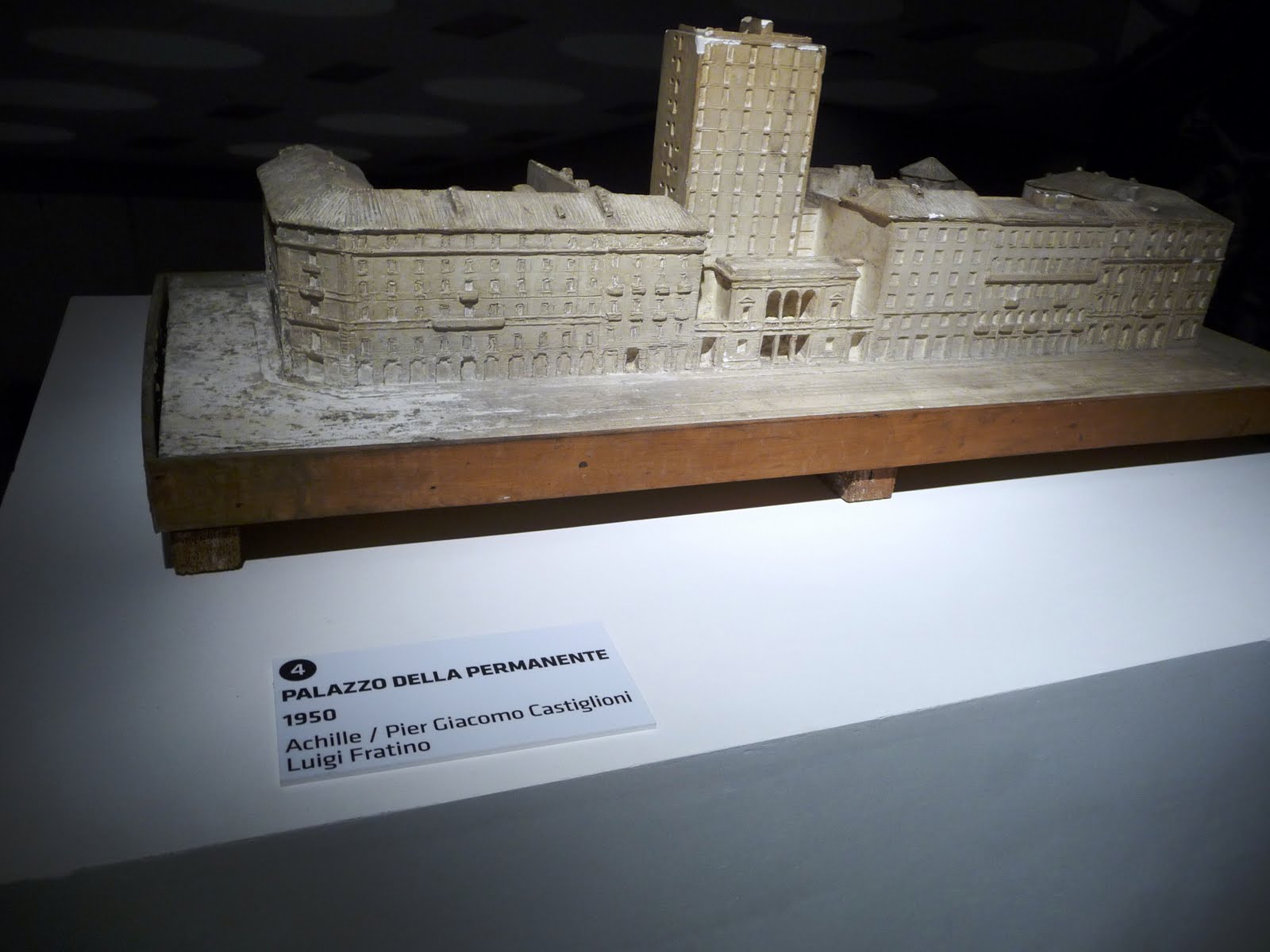
From the Gruppo Rionale Fascista, ironically made using slices of cheese, to the traveling exhibits for RAI, from the Palazzo della Permanente in Milan to the installation for the Fernand Léger exhibition, all the way to the briefcase with models of four parish churches, the maquettes narrate a design path that reveals how Achille’s father Giannino Castiglioni, a realist painter and sculptor, transmitted the love of materials and manual gestures to his son.

“I always start with an idea – Achille Castiglioni said in the 1980s – and then I modify it and develop it as I go along. There is a lot of model making in my work, also because I am the son of a sculptor and I always saw my father working with his hands, shaping material to gradually give it the desired form.”

A gift inherited from his father Giannino, seen here in a series of photographs as he works on sculpting sacred figures. From him, Achille Castiglioni learned the sense of material, on both the most grand and the most modest scales. An ability to think about material as others have thought about color, music, poetry.

De Padova wanted to start here, to narrate the world of Achille Castiglioni, also through a wide selection of videos and photographic materials. To investigate the secret of the “Castliglioni Effect”, that magic that makes his installations, including the unforgettable designs for the windows of the showroom on Corso Venezia, still innovative, contemporary and unique today.

Among the twenty-three models, the show at Corso Venezia will also include two of the so-called “mystery” maquettes: projects without a name or a date, conserved at the Studio Museo Achille Castiglioni of the Triennale Design Museum, and still awaiting an explanation. Visitors to the show are urged to supply any clues for possible identification: maybe someone knows who commissioned the projects? Or remembers where, and how? The search is on for clues, perhaps with surprising effects.

The exhibition will welcome visitors at the entrance to the De Padova showroom and lead them to the first floor. There, applying the lesson of Achille Castiglioni, over 400 sq meters set the multimedia stage for the maquettes, with projections on ethereal surfaces, portraits, interviews.

“It is a pleasure to communicate the content of an exhibition, to make it understood – Achille Castiglioni said. – It is a difficult thing, but it allows you to do experiments, while in architectural projects you can’t take chances, you have to respond to very precise needs, at times to the detriment of expressive values. In installations that last fifteen days you can try out materials, routes, lighting effects. If you make a mistake, it’s no big deal: you just lose a client”.

The long friendship between De Padova and Achille Castiglioni was consolidated in the mid-1980s, when Maddalena De Padova decided to develop a collection of furnishings for the home and office, and called on Vico Magistretti and Achille Castiglioni to design it. The resulting products were unique and extraordinary, creating a strong identity for the De Padova brand in Italy and abroad, and becoming part of the history of Italian Design."

As always, you can click any image to see a larger version.
Below pictures of the models from the exhibition.






Wednesday, May 5, 2010

Lissoni designed 18th century mansion on Lake Como


In this 18th century mansion on Lake Como, located in Lombardy, Italy, Piero Lissoni’s contemporary touch creates a dialogue with the historical structure of the building. "I liked the idea of open space. I simply opened the windows and have watched the special light of the lake, it was so clear. It inspired me, so I wanted to bring it inside the house."

The villa had gone through minor remodels over time, most always destroying the beauty of its originality.

"The first thing was to remove everything that was suffocating until the original structure was able to emerge. It took us a year to expose what was hidden: the coffered ceilings covered by soffits, or the original floors in Seminato Lombardo. Then, where there was no historical mosaic, we used a resin of neutral color, "says the architect Lissoni. "Fortunately the client was a ‘patron’ who sought expert artisans in the restoration of churches. Artisans who were able to restore the ceiling frescoes and decorated staircase."

Because of this, they were able to save the staircase’s beautiful balustrade from the early 1900’s, an element of great dramatic impact.

Lissoni also created visual connections; he wanted the interior to give a sense of deep space. The harmony between ancient and modern can be noticed in the bathroom: "The aim was to maintain the original environment, so the problem was solved by inserting a volume, a box that contains the bathroom.”

It was very complex to work with the existing space: "You could not touch anything, so we designed an invisible maze that went from room to room." Very little furniture and lots of glass: "The furniture should be minimal for me," Lissoni continues. "Items must be in harmony with the space. In my project I put the necessary. In a house like this I would not have put much, but what I consider essential is different from the needs of those who inhabit it. I would not even have hung paintings; I suggested getting a couple and leaning them against the wall. "

Please see the photos below. And as always, you can click any image to see a larger version.
 
Sturm und Drang mirror designed by Piero Lissoni for Glas Italia.  Glass Angelo e Angelo sculpture and Crystal sofa, both designed by Jean-Marie Massaud for Glas Italia.


 Curve armchair designed by Piero Lissoni for Living Divani

Oscar table for Glas Italia and Grove bench for Porro, both designed by Piero Lissoni

Offshore bed and bench designed by Piero Lissoni for Porro

Tuesday, April 27, 2010

L'Appartamento

There was plenty to see at this year's Salone del Mobile.  Throughout the next few weeks, we'll share with you our favorites.

One of the highlight's was Boffi's transformation of a Milan apartment.  Boffi teamed up with Living Divani to showcase their products in a more realistic setting.  Take a look at the video below:


L'Appartamento from DZINE

We also found some great shots of the interior.  As always, you can click any image to see a larger version. 

The entrance at Via Solferino 11 in Milan.


The new sofa by Piero Lissoni by Living Divani "Chemise" with the "Bolle" tables by Nathan Yong for Living Divani and the "Ile Club" bench by Lissoni. In the back the "boiserie/library" by Boffi.


The "Softwall" bed by Lissoni for Living Divani.


The "Curve" armchairs by Lissoni for Living Divani.


The "4mm" table by Studiocharlie and the "Danae" light pendant by  Maurizio Galante and Tal Lancman for Boffi and the "Maja D" chairs by Lissoni  for Living Divani.


The "K14" with the new wooden top by Norbert Wangen for Boffi, in the back the "Duemilaotto" tall units by Lissoni for Boffi.


The "Duemilaotto" closets by Lissoni for Boffi.


The new bathroom system by Piero Lissoni for Boffi.


All images via

Friday, April 23, 2010

Beam House in Japan

We recently stumbled upon these beautiful photos of an 'Ile' sectional from Living Divani.  It's always fun and exciting to see the pieces we carry featured around the world in different properties.  In this case, it's a recently completed residence in Japan, called the Beam House.  Designed by Bunzo Ogawa of Future Studio, the home was completed in 2009. 

As always, you can click any image to see a larger version. 


Photos: Toshiyuki Yano

Click here for more photos of the home.

Thursday, April 22, 2010

Established and Sons 2010 Milan overview

From Design Guide:
YDN Designguide presents the 2010 collection of Established & Sons, first shown in Milan. We speak to Martino Gamper and Scholten en Baijings about their new work.


text from Established & Sons:

“In Milan 2009 Established & Sons created an enclosed and concealed environment to display the collections, visitors were forced to enter into a ‘shanty’ or ‘township’ installation to discover the products. In 2010, Established & Sons latest and highly impactful concept will be quite the opposite.”

2010 also marks the year that Established & Sons launches Estd, a new collection of exceptional objects with practical use. This is an own-label collection by Established & Sons.

Via Design Guide

Tuesday, April 6, 2010

Profile of Piero Lissoni in the latest issue of Dwell


In September of 2009, DZINE hosted an event for Piero Lissoni. Jordan Kushins from Dwell was there to interview him, and their chat has just been published in the March issue of Dwell.

Here's what Piero had to say:

Ideal working environment:

Everywhere. I may prefer to work at a classical table in a classical office with a lot of noise, or a beautiful park, or in a forest, or on the top of a mountain. It’s totally personal; there are no limits.

Lucky break:

Love is the real lucky break. It can happen in a flash.

“Eureka!” moment:

To enjoy a fantastic cappuccino in the morning with a very good croissant. This can help the creative process a lot.

Hero:

Donald Duck. He is, at the same time, human, stupid, and a genius.

Best seat in the house:

In the kitchen.

A book:

I have a biblioteca. Two of my favorite books are The Odyssey, by Homer, and Six Memos for the Next Millennium, by Italo Calvino.

A film:

There are too many.

Worst-ever idea:

It’s not possible to talk about it.

Highest compliment:

To be human. Humanity is so complex. You have to be nice, angry, and arrogant. A fighter and a lover.

Soundtrack:

I like baroque music from the 17th century, especially Bach, and the piano player Glenn Gould.

Antihero:

Stupidity is the antihero. I’m against ignorant people and unfortunately this world is full of them.

Best advice:

Every moment of every day is a long intellectual process. Professionally, everything is possible. You have to be lucky, but you also have to be good.

When not designing:

I design a lot.

Dream commission:

To be able to continue in this way for many years.

I wish I had:

More time to spend sailing, skiing, climbing, walking somewhere—–anywhere.

Looking forward to:

Girls. Beauty is a special alphabet. More than just long legs, artifice, and plastic; it’s looking true, a nice light in the eyes, some natural movement.

For more information, click here to visit Dwell.

Thursday, April 1, 2010

Memory by Tokujin Yoshioka for Moroso

Here at DZINE, we’re big fans of Japanese designer Tokujin Yoshioka. We’re constantly watching his work evolve, and we wait with anticipation whenever there’s rumor of new pieces from him being prototyped or put into production.

With that said, we are pleased to share with you what he’ll be debuting with Moroso in the upcoming weeks for Salone de Mobile.


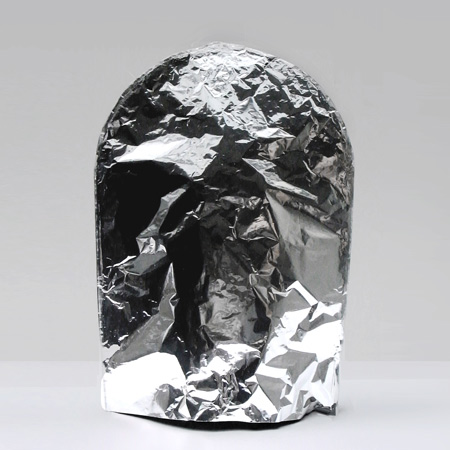
It’s called Memory – chair without a shape


The chair is covered in a dome of fabric made of recycled aluminum, which retains the shape it’s squashed into.


From Yoshioka: “For this work, I developed a special fabric with recycled aluminum, and pondered about creating a chair that transforms and memorizes its shape. This chair might remind us of the beauty in nature with its ever-changing expressions, and also create impression as if there is no presence of design.”


Click here to read more about Tokujin Yoshioka.